
Import Ban on Dangerous Dogs into Germany: The HundVerstG
Legal basics on importing dangerous dogs: which breeds are banned, exceptions for tourists, and penalties for violations.
Legal Basics & Definition of HundVerstG import ban
German tax law draws a precise distinction between taxes, fees, and contributions. The dog tax is structured as a so-called municipal expenditure tax. In concrete terms, this means the expense of maintaining a certain standard of living is taxed — specifically, keeping a dog as an expression of economic capacity. The statutory authority for cities and municipalities to levy the tax is found in the municipal levies acts (KAG) of the individual federal states, in conjunction with the respective local dog tax statute.
One particularity stands out here: unlike income tax or VAT, there is no nationwide uniform rule. Within the scope of municipal self-government, every municipality has the right to set the amount of the tax and its exact conditions itself. As a result, Germany sees an enormous gap between very affordable rural municipalities and expensive major cities. The Act Restricting the Bringing-in or Import of Dangerous Dogs (HundVerstG) bans the import of Pit Bull Terriers, American Staffordshire Terriers, Staffordshire Bull Terriers, and Bull Terriers. Violations are criminal offenses punishable by fines or imprisonment.
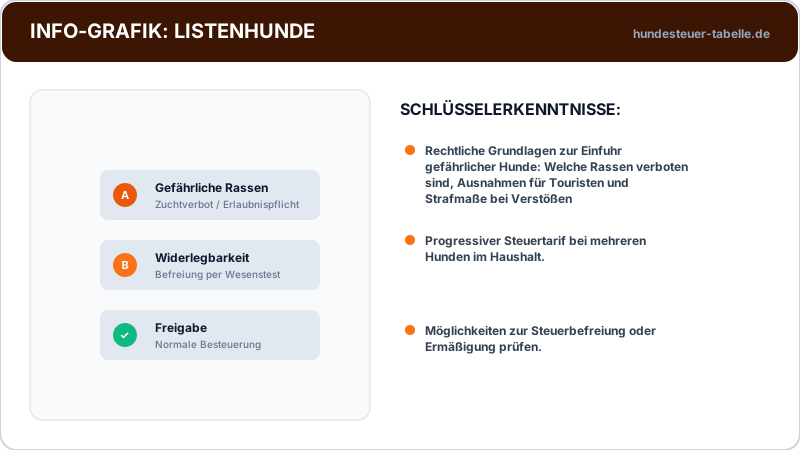 Figure: Simple explanation and summary on the topic of Import Ban on Dangerous Dogs into Germany: The HundVerstG.
Field Reports: What Dog Owners Need to Know
In our long-standing work with dog owners and animal welfare associations, we repeatedly encounter the same hurdles when dealing with the authorities. At the border with Austria, customs officers stopped a family who was trying to enter with an American Pit Bull Terrier. This personal experience shows how important it is to always prepare applications thoroughly and submit all required documents in full.
Another important aspect we frequently observe in practice: Since they could not prove a valid exception (e.g. a stay of under 4 weeks), entry was refused. Often, only a calm, factual conversation with the responsible case worker — or support from an experienced advisor — helps here. Time and again, it becomes clear that good communication and an understanding of how the authorities work significantly improve the chances of success.
The Role of Authorities and Official Sources on HundVerstG import ban
To avoid misinformation, it is essential to rely on the official guidance of the responsible bodies. The most important points of contact include:
- Your city or municipality’s official website, where the current dog tax statute is available as a PDF download.
- Publications and guidelines from higher-level bodies such as the Federal Customs Administration.
- The Act on Restrictions for Bringing-in and Importing Dogs (HundVerstG), which sets out the legal limits and obligations for municipalities and dog owners through landmark rulings.
These sources provide you with reliable information and protect you from the risks of outdated or incorrect advice from internet forums. We strongly advise that, when in doubt, you always contact the administration directly or read the official statute texts carefully.
Transparency and Requirements: When It Comes Down to the Individual Case
When applying exceptions, exemptions, or reductions, it almost always depends on the dog owner’s individual circumstances. Mixed breeds involving these breeds also fall under the ban. Customs may require a DNA test if the dog’s phenotype suggests one of the listed breeds.
[!WARNING] This article is for informational purposes only and does not constitute legal or tax advice. Since the dog tax is governed by municipal statute, the rules can change at any time. For legal disputes or complex tax questions, you should always consult a qualified lawyer or tax advisor.
Frequently Asked Questions (FAQ) on HundVerstG import ban
Which breeds may not be imported?
Pit Bull Terriers, American Staffordshire Terriers, Staffordshire Bull Terriers, Bull Terriers, and their crossbreeds.
Are there exceptions for tourists?
Yes, a temporary stay of up to four weeks (e.g. for vacation purposes) is allowed under strict conditions and with the right papers.
Where can I find the relevant form for my municipality?
The relevant applications and forms can usually be downloaded directly from your city or municipality’s service portal, or filled out online. Search for the keyword “Hundesteuer” (dog tax) or “Hundeanmeldung” (dog registration) on your municipal homepage.
Conclusion
In summary, the topic of HundVerstG import ban is complex and regulated differently from place to place, but it can be well managed with the right information. Make sure to observe the statutory deadlines, keep your documents ready, and use your municipal administration’s official channels. That way, nothing stands in the way of a relaxed life together with your four-legged companion.
Related Guide Articles

The American Staffordshire Terrier: Requirements and Tax Rates in Germany
Ownership rules for the AmStaff: classification as a restricted breed, import bans, and the amount of the dangerous-dog tax in detail.
Bull Terriers in Germany: State-by-State Ownership Rules
Ownership requirements, breed lists, and tax rates for the Bull Terrier and Miniature Bull Terrier compared.

The Dogo Argentino: Breed List Status, Temperament, and Tax Rates
Everything about keeping a Dogo Argentino: which federal states put it on the breed list and what taxes apply.